

Fractional CFO reporting cadence explained: the right rhythm assigns each financial update to the role that can act on it. In a hypothetical growing business preparing for a lender conversation, the bookkeeper keeps transactions current, the accounting lead closes and checks the records, and the fractional CFO turns those records into cash, forecast, and decision updates. The cadence matters when decisions are moving faster than the company’s reporting.
Start with the decision the report needs to support
A reporting cadence should follow the business decision, not a calendar copied from another company. In this hypothetical example, a growing U.S. business is considering a loan while adding staff and managing uneven customer payments. The owner needs to know whether cash can cover near-term commitments, whether the forecast still holds, and which records a lender may ask to review.
The fractional CFO begins by identifying who makes each decision and what information they need in time to make it. A cash concern may need attention before the next monthly review; a budget change may fit a regular planning meeting. The CFO also asks who owns each source record, who reviews it, and what happens when the usual owner is unavailable.
That discussion separates three kinds of work. Bookkeeping records and categorizes transactions. Accounting reconciles accounts, applies the company’s reporting rules, and prepares financial statements. Strategic finance uses those records to assess trade-offs, forecast outcomes, and advise leaders. The roles may sit with different people or overlap in a small team, but the handoff still needs to be explicit.
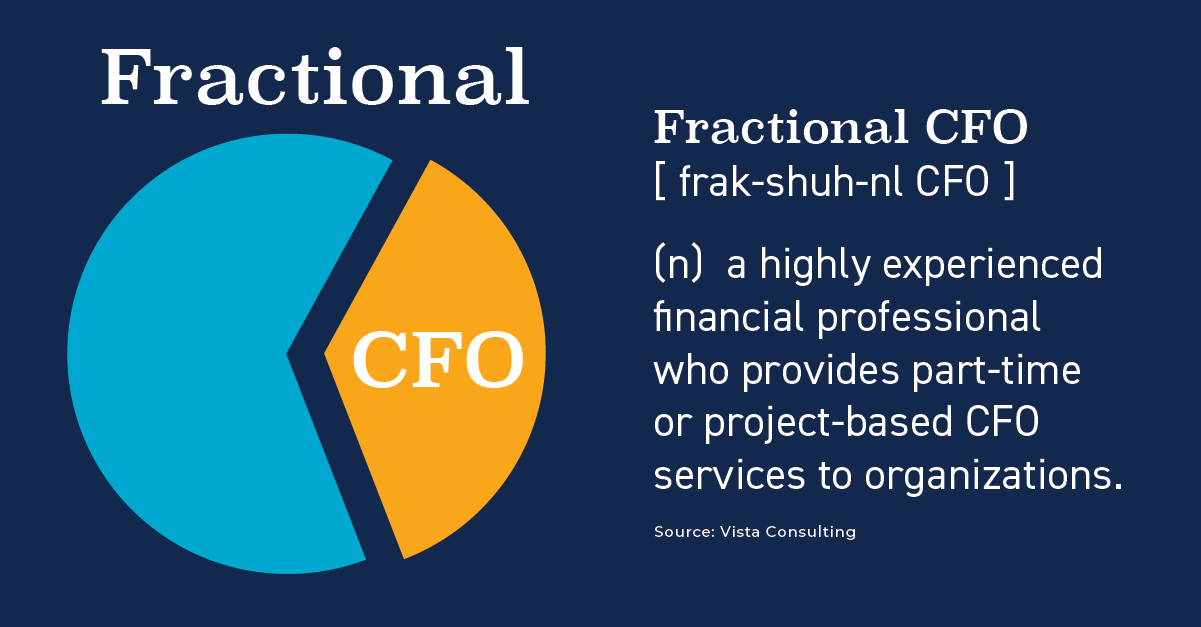
A useful cadence says what information is produced, by whom, by when, and for which decision. It also says what happens when information is missing or late. If the accounts are not reconciled, the CFO should know whether a cash view is still reliable, which assumptions need checking, and whether a decision should wait.
The business does not need a report for every possible question. It needs a dependable path from activity to reviewed information to action. For the loan discussion, that may mean a current cash view, a monthly performance package, and a forecast that can be updated when hiring or collections change.
Keep transaction work close to the people handling it
Bookkeeping needs a steady operating rhythm because the ledger is the starting point for every later report. In the example, the person handling payables records bills, confirms the right account and approval, and follows up on missing documentation. Customer receipts and expenses should be entered promptly enough that an aging report or cash review does not depend on someone reconstructing activity from memory.
The bookkeeper’s routine is not the same as the CFO’s reporting cadence. It covers the repeatable work that keeps records current: coding transactions, attaching support, reconciling bank activity, and flagging items that do not match. The exact timing depends on transaction volume, payment cycles, and staffing. A small operation may batch some work, what is a fractional cfo while a busy one may need more frequent processing.
For the lender scenario, the operator should check the handoff between whoever approves a bill and whoever records or pays it. The process should preserve the approval and supporting document, rather than relying on an informal message that disappears. If one person handles several steps, an owner or reviewer can still inspect exceptions and confirm that significant payments have an appropriate approval.
Bookkeeping should also make exceptions visible. A duplicate payment, an unfamiliar vendor, a customer balance that does not match expectations, or a bank transaction without support deserves follow-up. The person doing the work can flag the item; the accounting lead or owner determines how it should be treated. The CFO should not have to infer these issues from a polished summary.
When staff are remote or the work is outsourced, the same controls apply. Agree where records live, how questions are raised, who can approve changes, and how unresolved items are tracked. Remote work does not remove the need for a clear handoff. It makes written ownership and accessible source documents more important when people are not in the same room.
Use the close to turn entries into reviewed information
The accounting close is where current bookkeeping becomes a set of financial records that leaders can use. In the hypothetical business, the accounting lead reconciles cash and key balance sheet accounts, reviews unusual entries, checks that relevant transactions are recorded in the proper period, and follows up on open questions before the statements go to the CFO.
A close checklist gives each task an owner and a status. It should distinguish work that is complete from work that is estimated, disputed, or waiting on documentation. The checklist can also note who reviewed important reconciliations and what remains unresolved. That gives the CFO a way to judge whether a reported balance is dependable enough for a forecast or lender discussion.
The timing should reflect the business’s needs and the quality of its records. A faster close is not useful if unresolved transactions are hidden or estimates are presented as final. If the accounting team is short-staffed, the CFO may help set priorities, but strategic finance work should not quietly replace basic reconciliation. First clarify which records are incomplete and what decisions those gaps affect.
Financial statements answer what is a fractional Cfo the company recorded during a period and what it owned or owed at a point in time. They do not, by themselves, explain what cash may be needed next or whether a planned hire fits the operating plan. The accounting lead prepares reliable statements; the CFO interprets them alongside operational information and makes assumptions visible.
For the example business, the owner should receive the statements with a brief note on material changes and unresolved items, not just a file attachment. If a customer balance increased, the note can identify whether the cause is a new invoice, a delayed payment, or a recording question. The reader then knows what to verify before treating the number as a basis for action.
Give the fractional CFO a decision-focused monthly review
The fractional CFO’s regular review should connect reported performance to decisions the leadership team can make. In the example, the monthly discussion compares actual results with the budget and current forecast, examines cash needs, and identifies changes that could affect the loan plan. The report needs a clear takeaway for each major variance, including whether it reflects timing, a changed assumption, or an error that still needs investigation.
A useful package can combine the income statement, balance sheet, cash flow view, budget comparison, and a short explanation of key movements. The exact contents depend on the company’s structure and questions. A report that includes every available metric may be harder to use than a smaller package that shows revenue collection, major spending, working capital, and cash assumptions the team can verify.
The CFO should distinguish facts from projections. Actual results come from the reviewed books; forecasts depend on assumptions about customer payments, payroll, purchasing, and other expected activity. Labeling assumptions and their owners helps the team see what changed. If collections slip, the forecast can be updated without rewriting history or presenting a scenario as a certainty.
The monthly meeting should produce decisions and assigned follow-up, not simply walk through charts. The owner might defer a discretionary purchase, ask the sales lead to review a collection issue, or revise a hiring date. The CFO records the decision, its financial implication, and who will provide the next update. That makes the next review a check on action rather than a repeat presentation.
Not every issue should wait for the monthly meeting. The team can agree in advance which events trigger an earlier alert, such as an unexpected cash shortfall, a missed debt payment, or a material change to a major customer arrangement. Those thresholds should fit the business and its financing terms; no universal threshold can replace the company’s actual obligations and risk tolerance.
Match forecast updates to the operating changes
A forecast should change when the assumptions behind it change, not merely because another reporting date arrived. In this scenario, the CFO tracks expected receipts, payroll, planned hiring, and large purchases because those items affect the cash available for debt service. The operator responsible for each assumption checks whether it still reflects what the business expects to happen.
The cadence can combine a regular monthly refresh with event-driven updates. A hiring delay, a customer payment that moves, or a newly proposed expense may require a change before the next meeting if it affects a decision in front of leadership. The CFO can show the base case alongside a clearly labeled alternative when uncertainty is meaningful, while keeping the actual results separate.
Working capital deserves attention from both finance and operations. A rising customer balance may reflect longer collection times, a billing delay, or a change in sales mix. More inventory may support planned demand or leave cash tied up longer than expected. The CFO identifies the financial effect; the operational owner explains what is happening in the process and what can be changed.
When cash becomes tight, the report should identify the timing and source of the pressure rather than offer false precision. The business may need to compare delaying a purchase, following up on overdue invoices, changing the hiring sequence, or discussing financing terms. The CFO can model the trade-offs, but leadership owns the operating choices, and a forecast cannot guarantee a lender’s decision.
Keep the assumption trail with the forecast. Note who supplied each input, when it was reviewed, and why a meaningful change was made. If the usual finance contact is away, another team member should be able to find the current version and understand the open questions. Continuity depends on accessible records, not just on having a capable person assigned to the work.
Prepare lender and investor reporting from the same records
External reporting should build on records that the accounting team can support and the CFO can explain. For the hypothetical loan conversation, the CFO organizes the statements, cash assumptions, debt information, and supporting schedules the lender requests. The company should first confirm the lender’s actual requirements rather than assume every institution asks for the same package.
The operator should check that the figures in a presentation reconcile to the underlying financial records. If the CFO adds an adjusted measure or a forecast, its definition and assumptions should be clear. A reader needs to know which figures are recorded results, which are management calculations, and which describe possible future conditions.

Investor reporting may call for a different emphasis, such as progress against a plan, cash runway assumptions, or the reasons a forecast has changed. The reporting cadence should account for the audience’s agreed expectations and the company’s ability to produce accurate information. A frequent update is not useful if the source data is inconsistent or the team cannot explain a variance.
The CFO can coordinate questions across finance, operations, and leadership, but the source owner should verify operational details. For example, the team responsible for sales should confirm the status of a major customer arrangement, while accounting confirms how recorded revenue appears in the books. If a question cannot be answered, track it rather than filling the gap with an assumption presented as fact.
Keep one controlled source for each approved report and preserve the supporting files. Record who reviewed the package, what was sent, and any follow-up commitments. This is useful even when there is no formal data room: a consistent record reduces the chance that leadership circulates an outdated forecast or gives different explanations for the same figure.
Expand the cadence when a transaction becomes real
Transaction preparation adds a more detailed reporting track without replacing ordinary accounting. If the business begins considering a sale or acquisition, the CFO can first assess whether financial records, supporting schedules, and operating explanations are coherent enough for review. This preparation may reveal missing contracts, inconsistent customer records, unsupported adjustments, or questions about how revenue and expenses were classified.
The work then shifts as discussions progress. During preparation, the CFO helps organize information and identify gaps. During due diligence, the team responds to specific requests, tracks document owners, and checks that answers agree with the books and prior statements. During negotiation, leadership may need timely analysis of price mechanics, debt, working capital, or proposed terms, with legal and tax advisers handling their respective matters.
Before closing, the cadence often becomes tied to defined requests, approvals, and transaction milestones. The CFO can coordinate financial schedules and communicate what remains open, but the company should not assume that a prepared package resolves every diligence question. The buyer, lender, or investor may ask for additional support, and the answer may depend on records the business has not yet assembled.
After an acquisition, financial reporting may need to support integration: account access, payment processes, reporting definitions, and responsibilities across the combined operation. The cadence should show who owns each data source and how changes are approved. A transition plan matters because the person who understood a legacy spreadsheet or bank process may no longer be available.
Transaction work has limits. A clean reporting process can make review more organized, but it cannot guarantee financing, a sale, a particular valuation, or a closing. Scope should also change with the company’s stage: a business exploring options may need a readiness review, while one in active diligence may need tighter request tracking and more frequent coordination.
Set a separate rhythm for urgent exceptions
An exception process gives the team a way to raise a financial issue before the next scheduled review. In the hypothetical business, a large customer says payment will be delayed after payroll and a vendor payment have already been planned. Waiting for the monthly meeting could leave the owner with an outdated cash view, so the team needs a clear route to flag the change and assess its effect.
The bookkeeper or accounting contact can first verify what has been recorded and what documentation supports the customer balance. The operational owner confirms the latest information about the payment and any related delivery or billing issue. The CFO then updates the relevant cash assumptions and explains which decisions may need attention. Each role contributes its own knowledge rather than passing the entire problem to finance.
Agree on what counts as an exception in terms the team can recognize. Examples may include an unplanned payment, a material change in expected collections, a debt obligation that needs attention, or a control issue such as an approval missing from a significant transaction. The business should set its own escalation criteria based on cash needs, contractual obligations, and the authority assigned to each role.
Record the alert, its source, who reviewed it, and the response. If the issue proves to be a timing difference rather than a cash shortfall, note that conclusion and the information that supports it. If the facts remain uncertain, show the range of possible outcomes in plain terms and identify when the assumption will be checked again.
Urgent updates should not turn every small change into a meeting. The point is to route material exceptions to the right decision-maker while leaving routine activity in the regular reporting cycle. A short written update may be enough when it clearly states the issue, the cash or reporting effect, the decision needed, and who owns the follow-up.
Verify these handoffs before agreeing on the cadence
Before settling the schedule, the owner should ask each participant to describe the work they own and the information they pass to the next person. The fractional CFO may lead planning and decision analysis, but the company still needs named owners for transaction entry, reconciliations, approvals, and operational assumptions. Clear ownership prevents the CFO’s role from becoming a vague substitute for an accounting process.
Check the records and access arrangements as carefully as the meeting calendar. Confirm where the ledger, reconciliations, contracts, forecast, and approved reports are stored; who can update them; and how a reviewer identifies the current version. For remote teams, agree how questions and exceptions are documented so that a handoff does not depend on an unavailable employee or a private chat history.
Then match each recurring update to a decision and a deadline. Ask what the owner can act on, what source supports the figure, who reviews it, and what happens if the source is late. If a report has no clear reader or decision, remove it or revisit its purpose. If a decision depends on an uncertain estimate, show the uncertainty instead of treating the estimate as settled.
Finally, revisit the cadence when the business changes: a new financing process, a larger transaction volume, an acquisition, a key employee departure, or a shift in customer payment behavior can expose weak handoffs. Keep the working routine that produces dependable records, and add strategic reviews where decisions require them. The right arrangement is the one the existing team can maintain and leadership can use.


